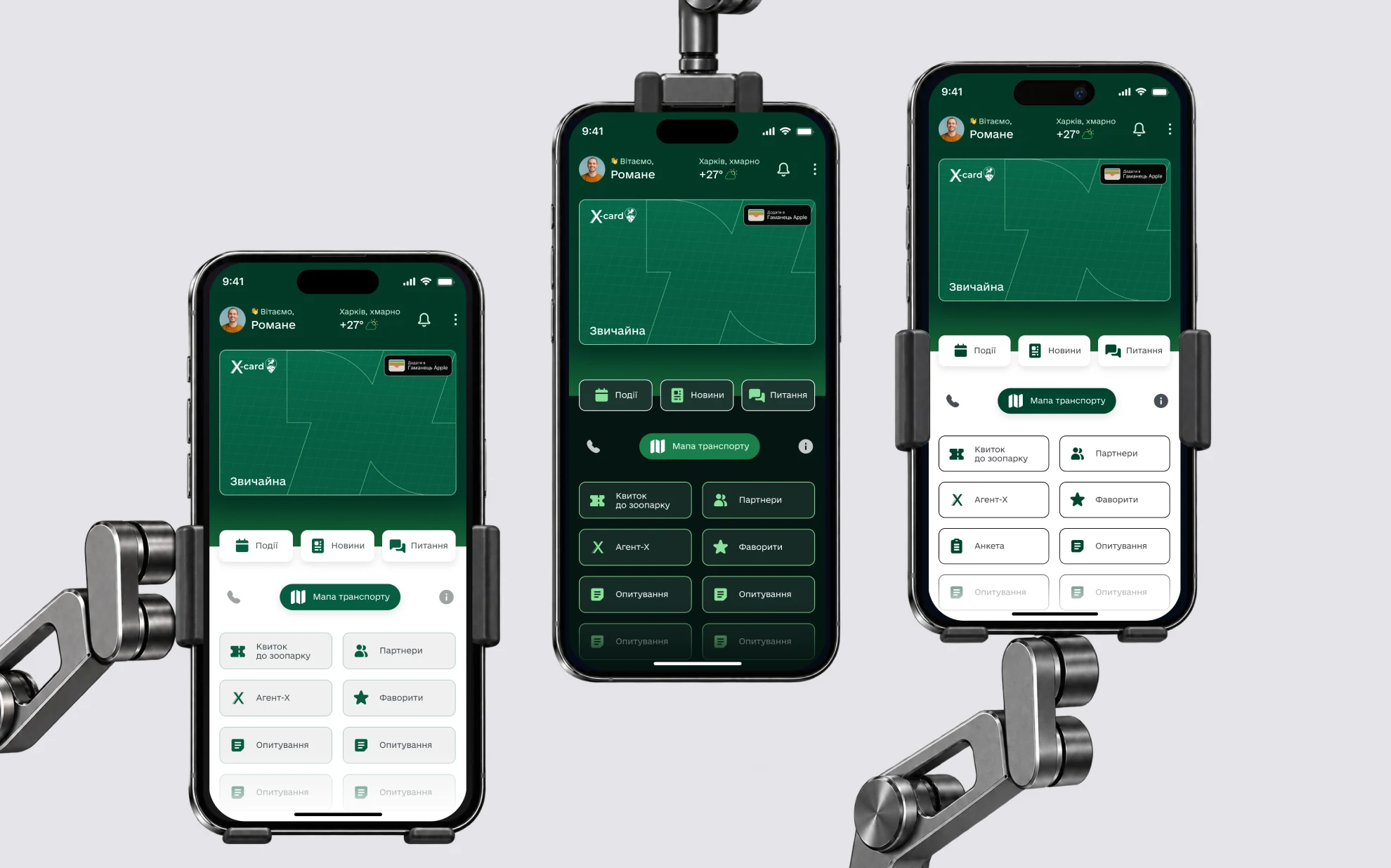
The account had two versions: the old one more capable, the new one more modern. There wasn’t enough user knowledge to decide what to move first.
Four weeks of Double Diamond: competitors, interviews, hypotheses and a quantitative survey, then a hi-fi prototype and testing. A project for a real client – Nova Poshta – done within a Projector course, with its own brief and problem. The decisions and the prototype were the team’s joint work.
My role
I led a team of 4 designers and split the work. Mine: in-depth interviews, generating and validating hypotheses, user flows and information architecture, user testing, presenting decisions to the client and the final presentation.
- In-depth interviews
- Generating and validating hypotheses
- User flows and information architecture
- User testing
- Presenting decisions to the client
- Final presentation
What the research showed
An analysis of SAT, UPS and both account versions gave two ideas for the prototype – a dashboard and split payment. 6 interviews surfaced 20+ pain points, and the survey checked which mattered most.
19 questions and 29 hypotheses: the survey checked the pain points from the interviews so we could decide what to do first.
Want reminders about uncollected parcels
→ solution 01: dashboardWant to pick a bag or box instead of entering dimensions
→ solution 03Want to pay off debt in one click
→ solution 04Want to see a main dashboard on sign-in
The same number chose drafts – so we checked the dashboard in tests → decision 01Want to split payment between sender and recipient
→ solution 02Dashboard instead of drafts
- Why
- The old version opened on drafts, with parcels, registers, transfers and debts scattered across sections. 70% of respondents want reminders about uncollected parcels, 46.7% want a dashboard.
- What we did
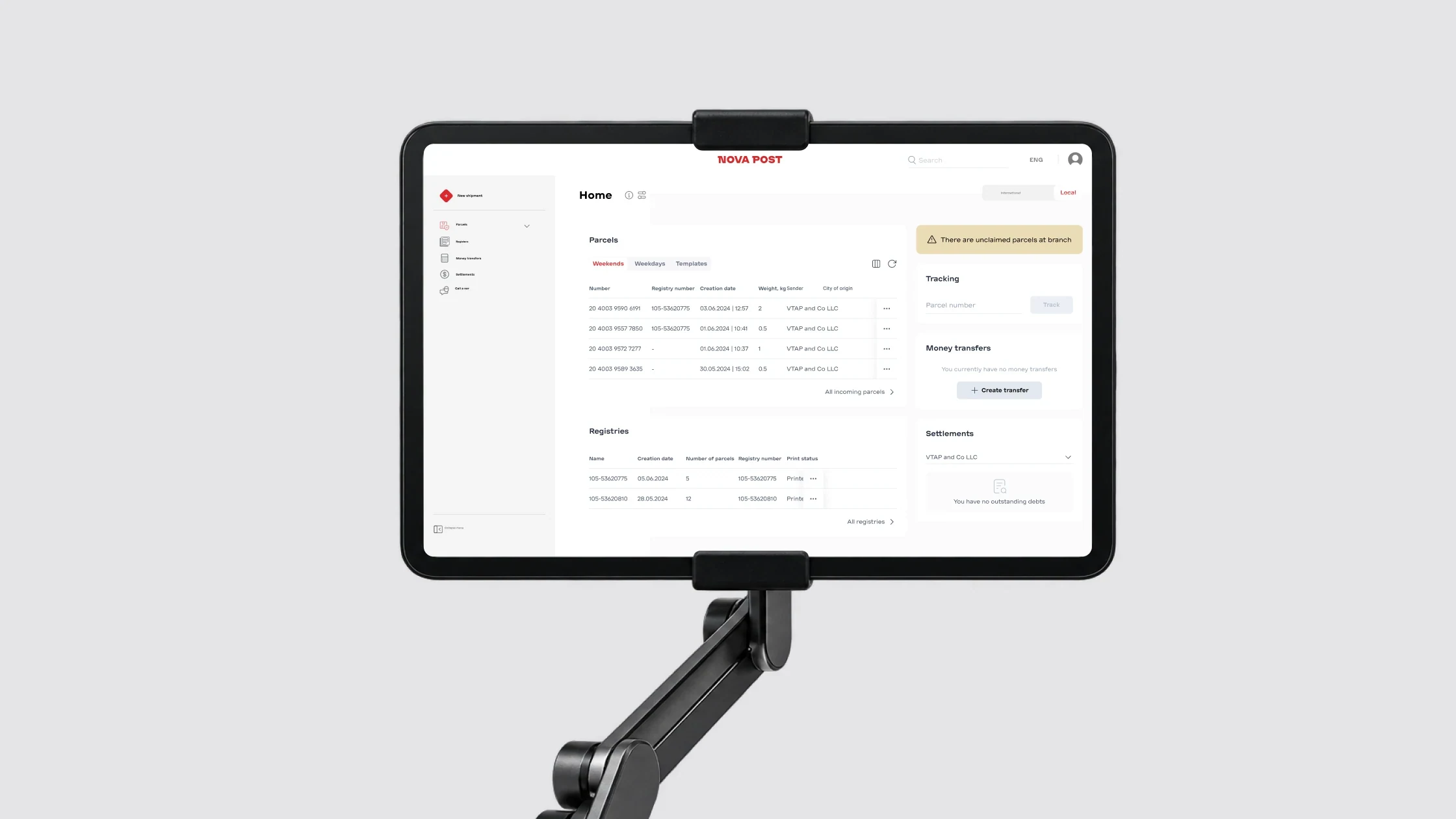
- A dashboard as the main page – an idea from UPS: parcels, registers, tracking, transfers and settlements on one screen, with reminders about uncollected parcels on top.
- Result
- The account opens on what needs doing, not on a list of drafts.
How we testedThe dashboard was checked in the first test scenario with 5 users.
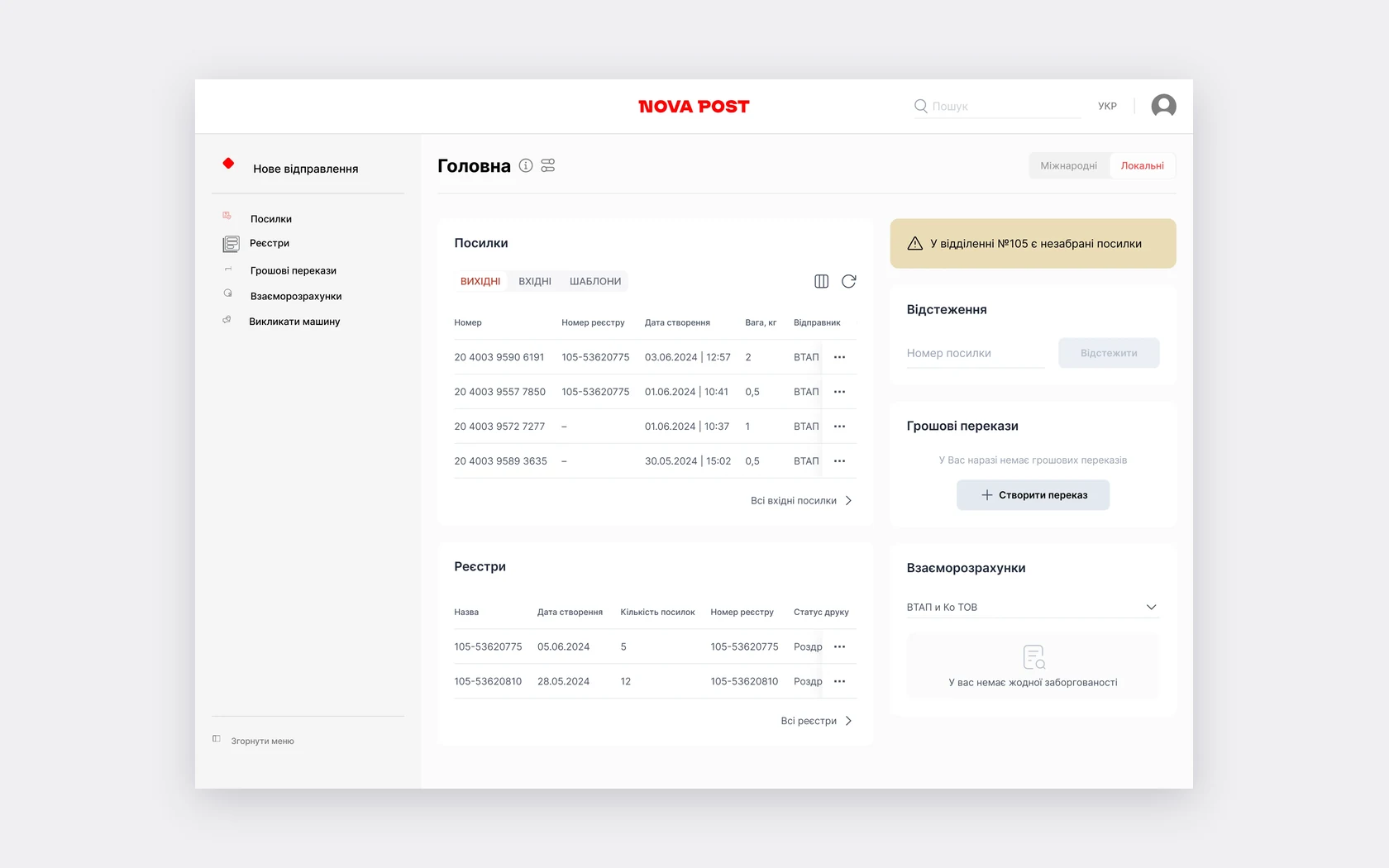
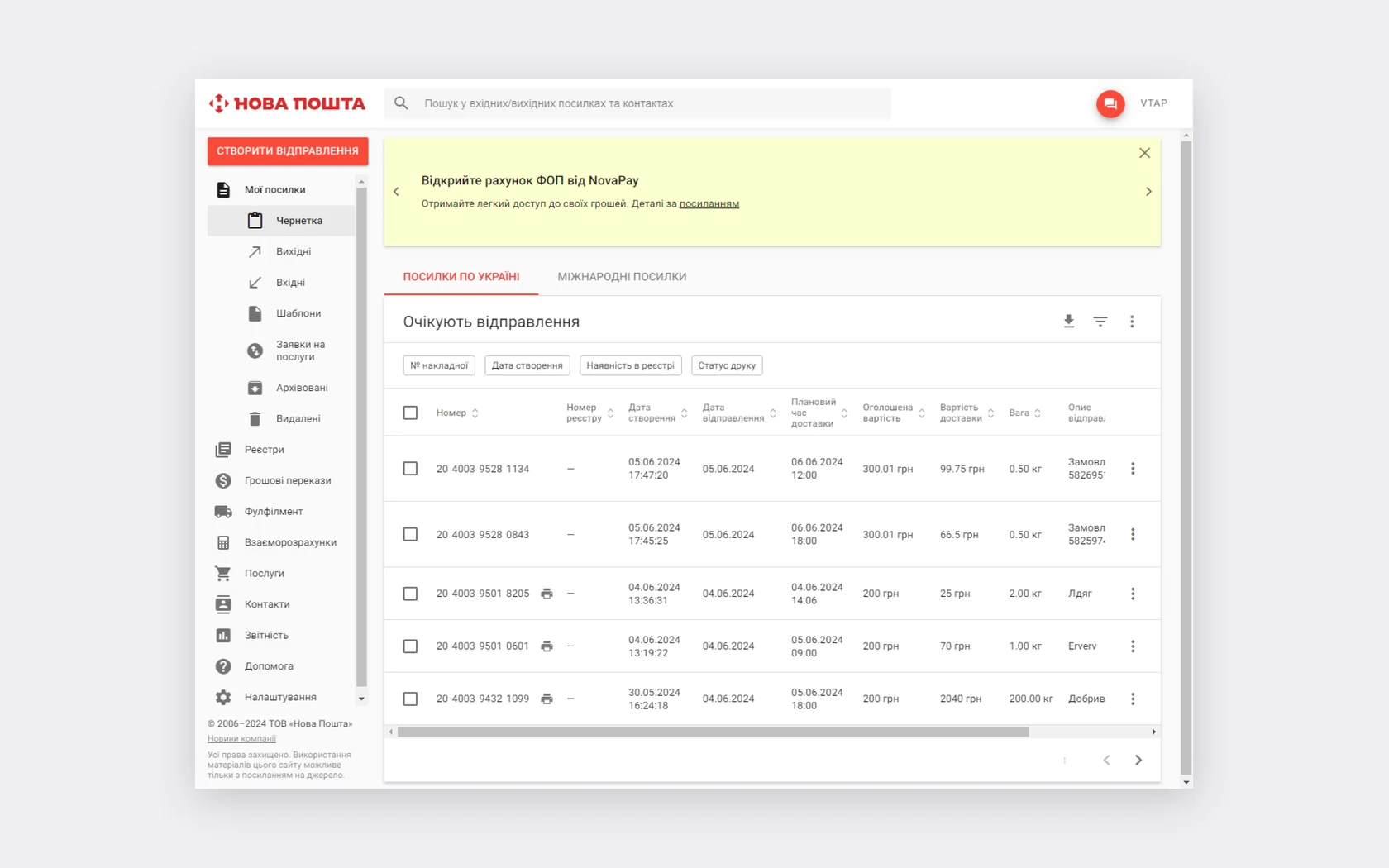 Old accountPrototype
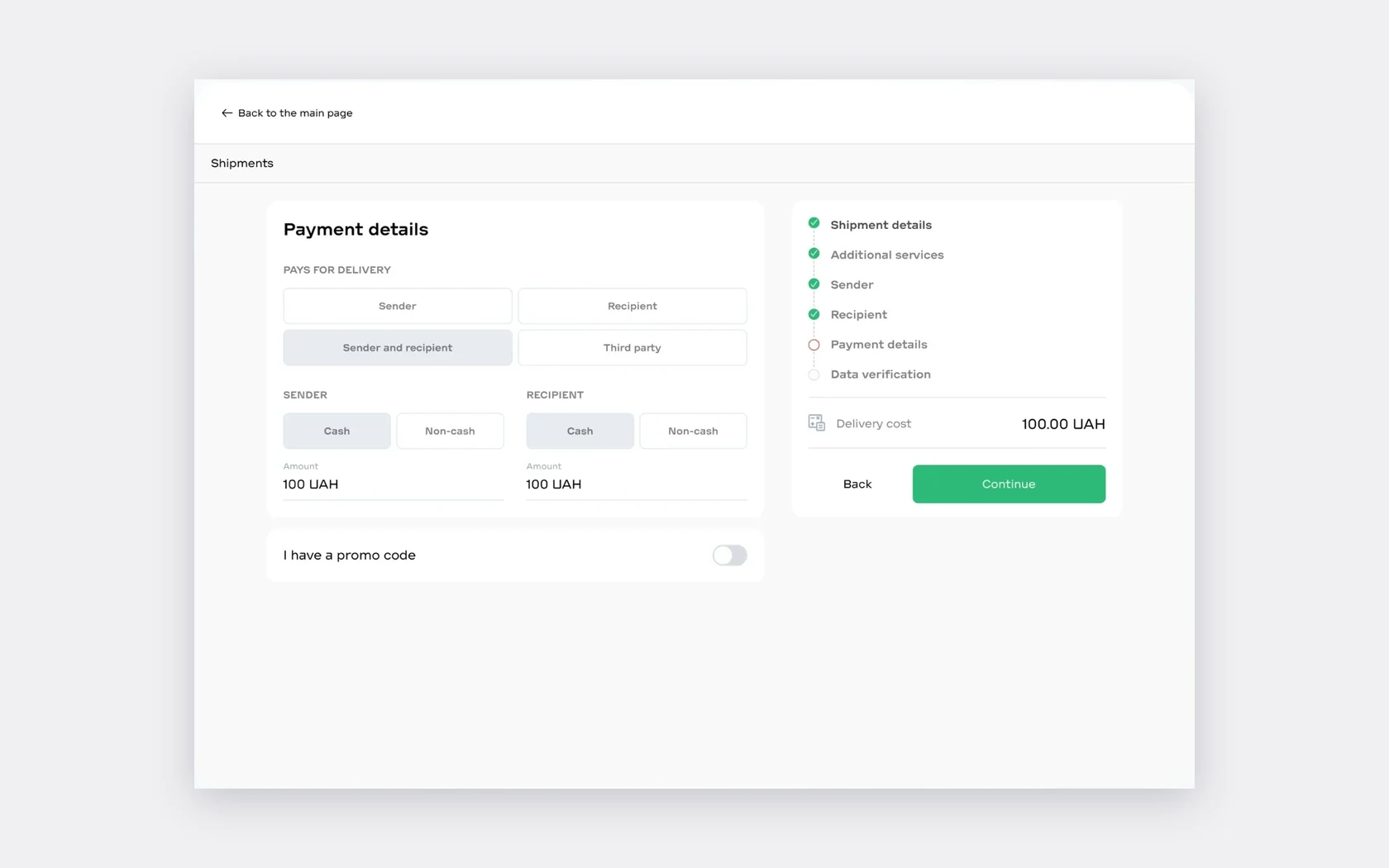
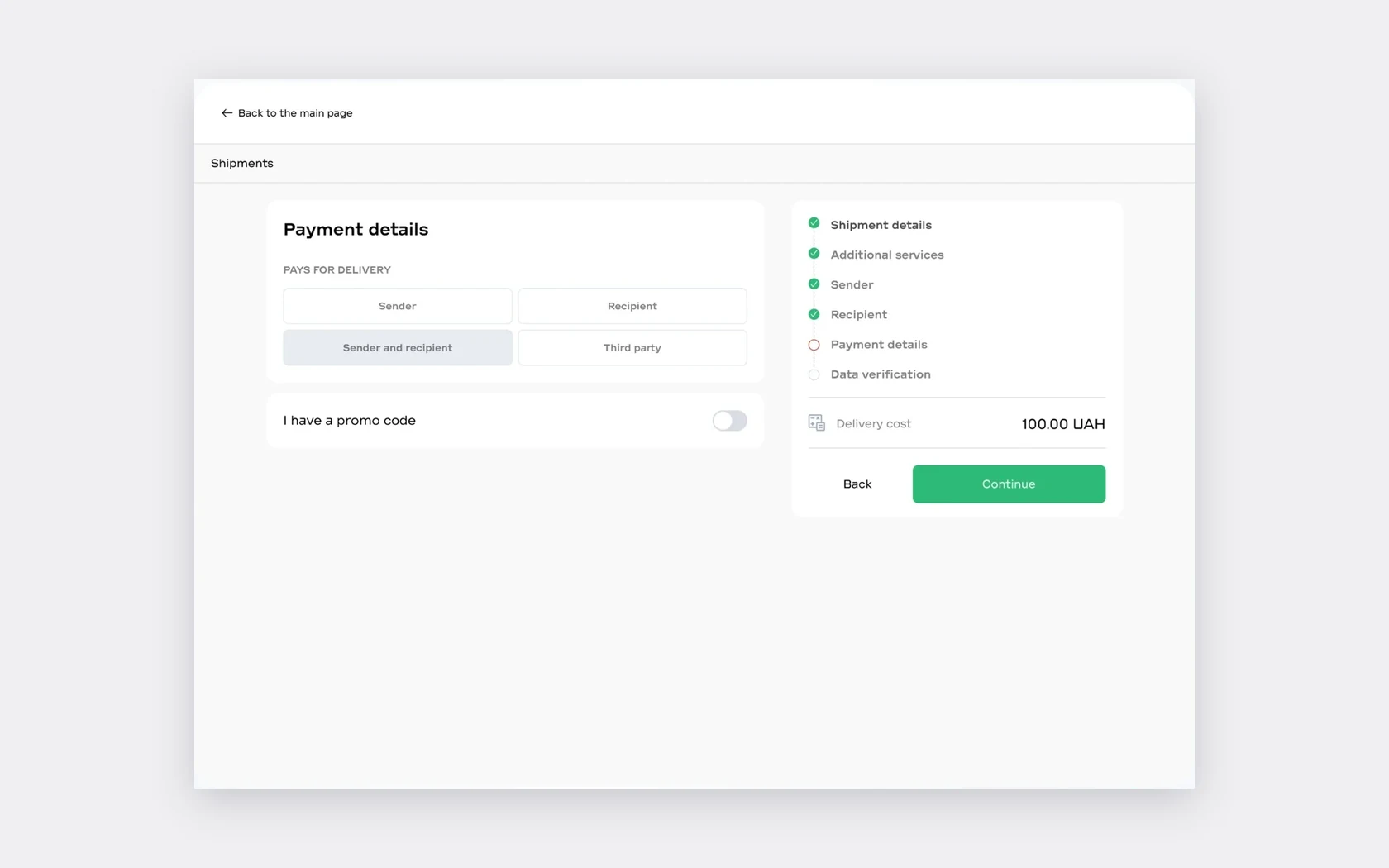
Payment can be split
- Why
- Businesses need to agree with clients on who pays for delivery, and the account didn’t allow splitting payment. 43.3% of respondents confirmed the need.
- What we did
- In the “Payment details” step the payer can be the sender, the recipient, both or a third party – an idea from SAT.
- Result
- We added a payment method choice for each payer.
Testing and follow-upTesting the first scenario showed the need to choose cash or card separately for each payer.
 Before testingAfter testing
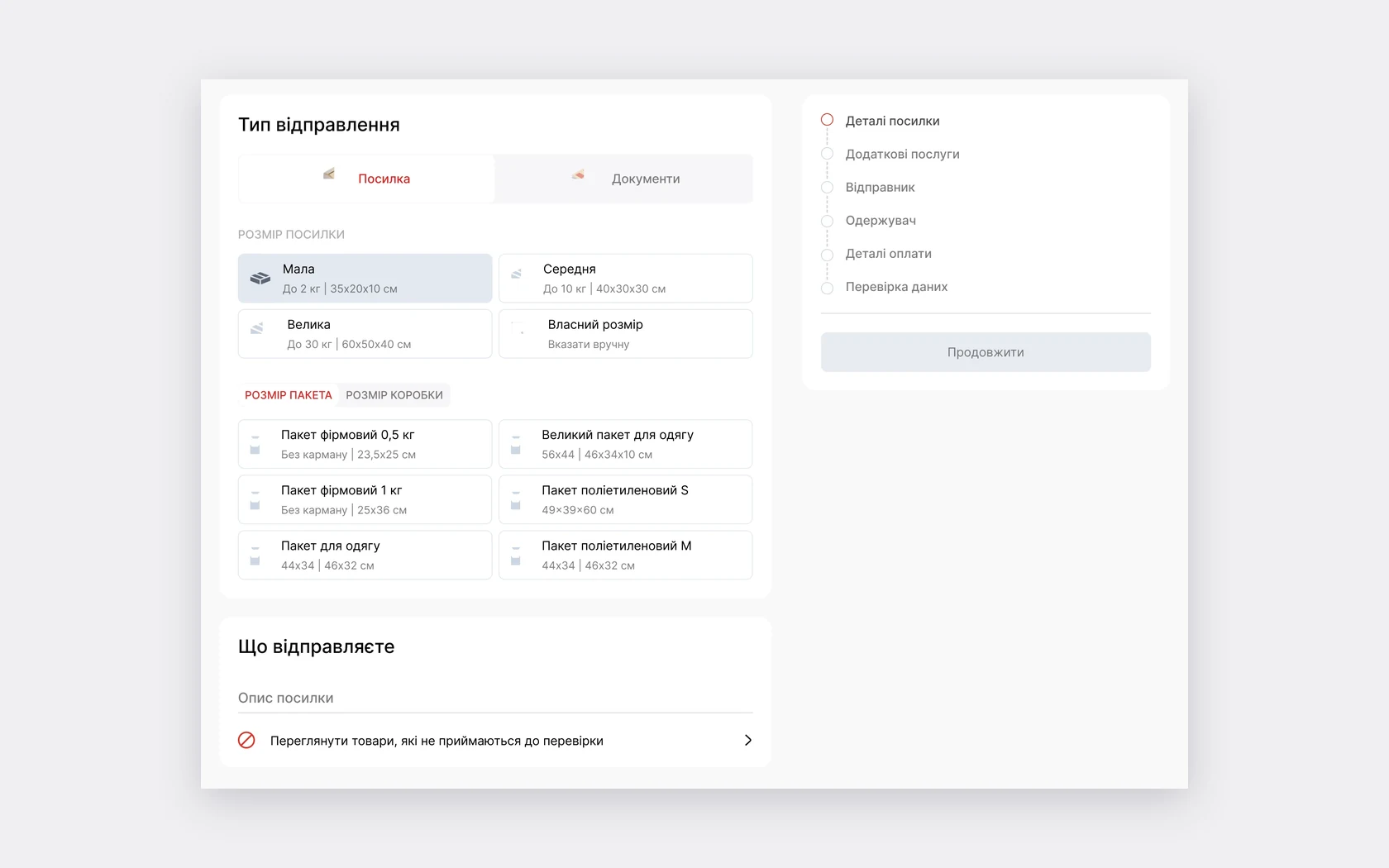
Bag or box instead of dimensions
- Why
- In interviews people complained about entering dimensions by hand. 56.7% of respondents want to pick a bag or box.
- What we did
- Standard sizes and branded bags or boxes to choose from, custom dimensions only when needed.
- Result
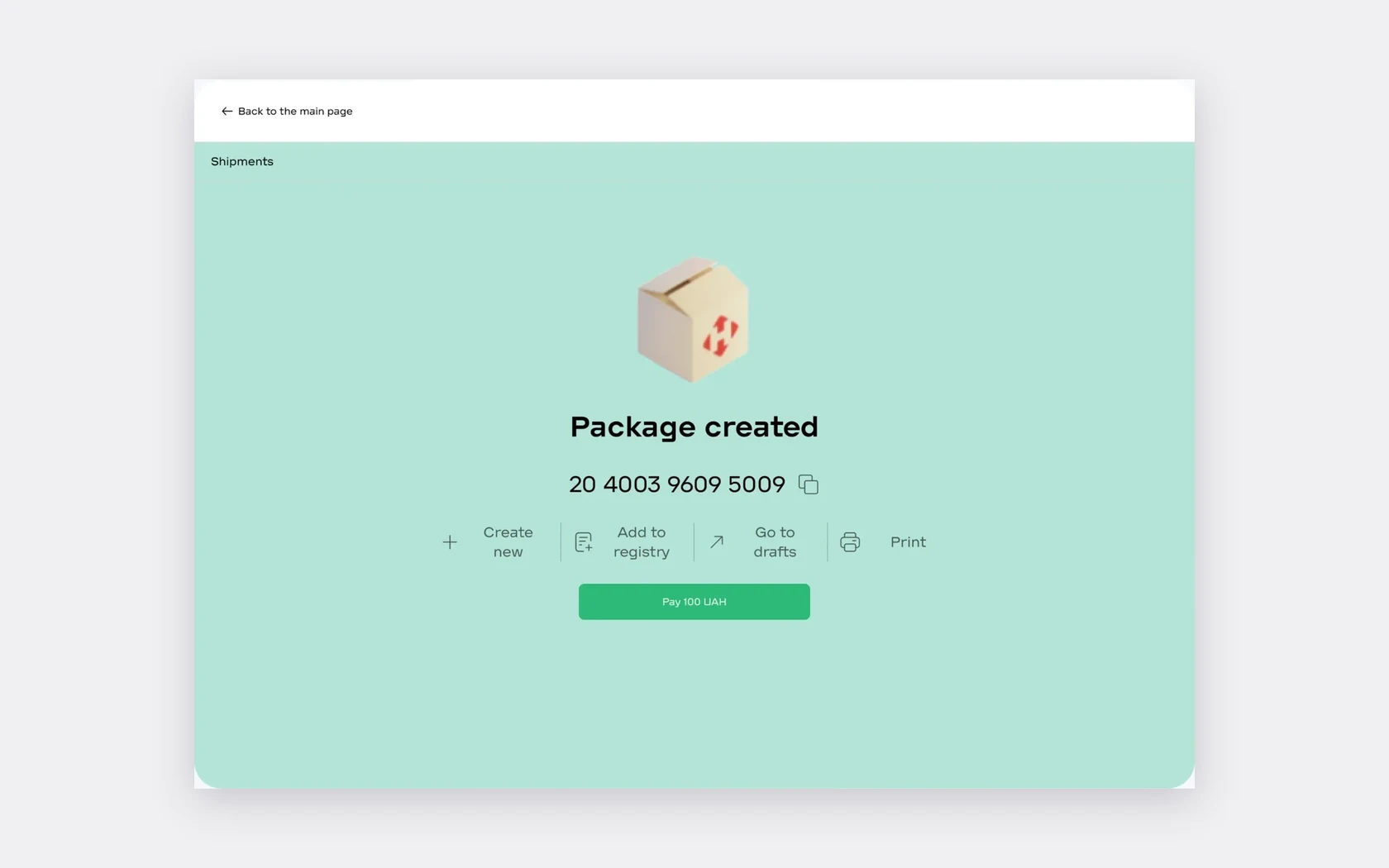
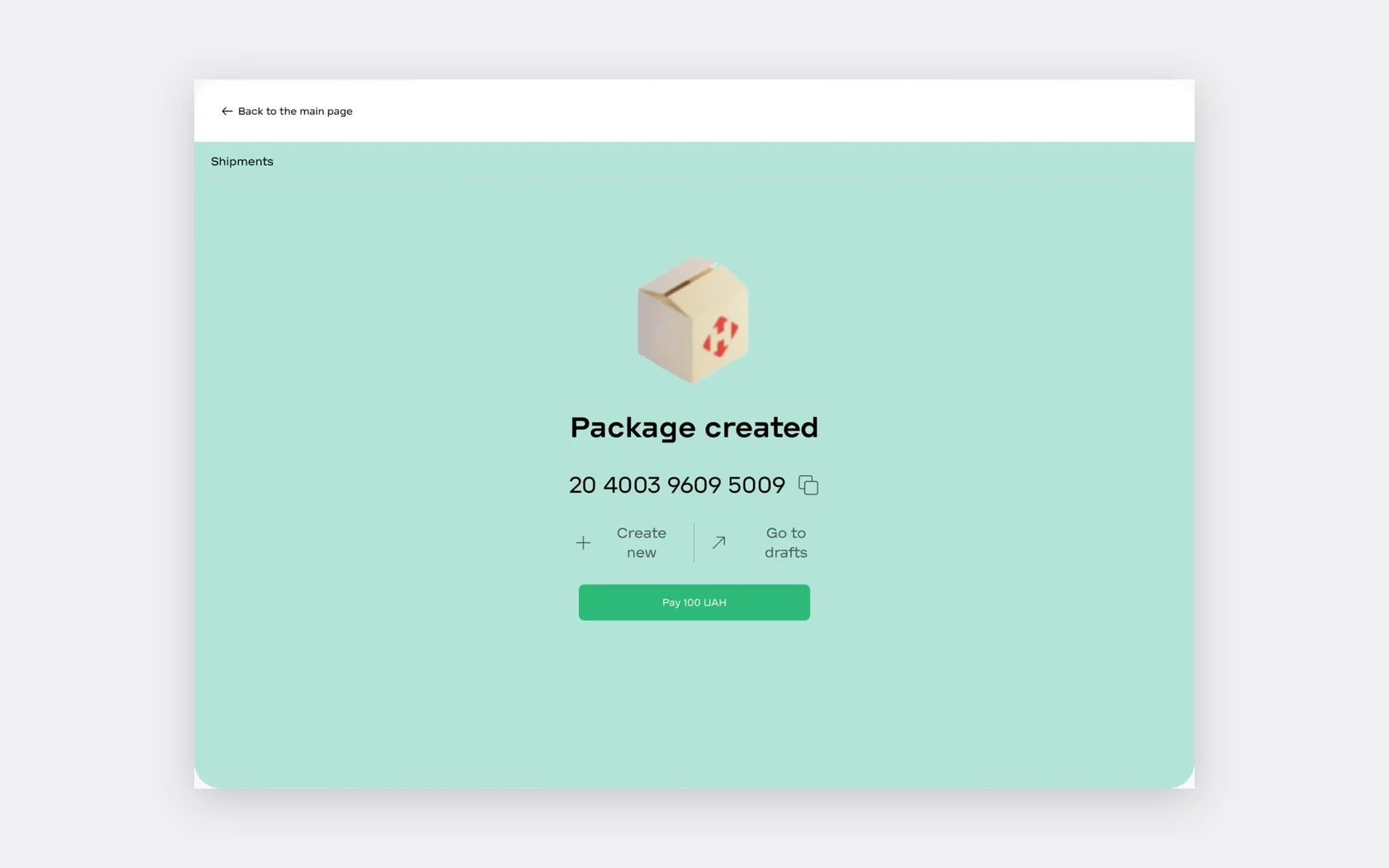
- We added “Add to register” and “Print” to the parcel-created screen.
Testing and follow-upTesting showed that next actions were missing after a parcel was created.
 Before testingAfter testing
Current debt and one-click payment
- Why
- Current debt was only visible on the 1st of the next month, and it couldn’t be paid with VAT in the account. 46.7% of respondents want one-click payment.
- What we did
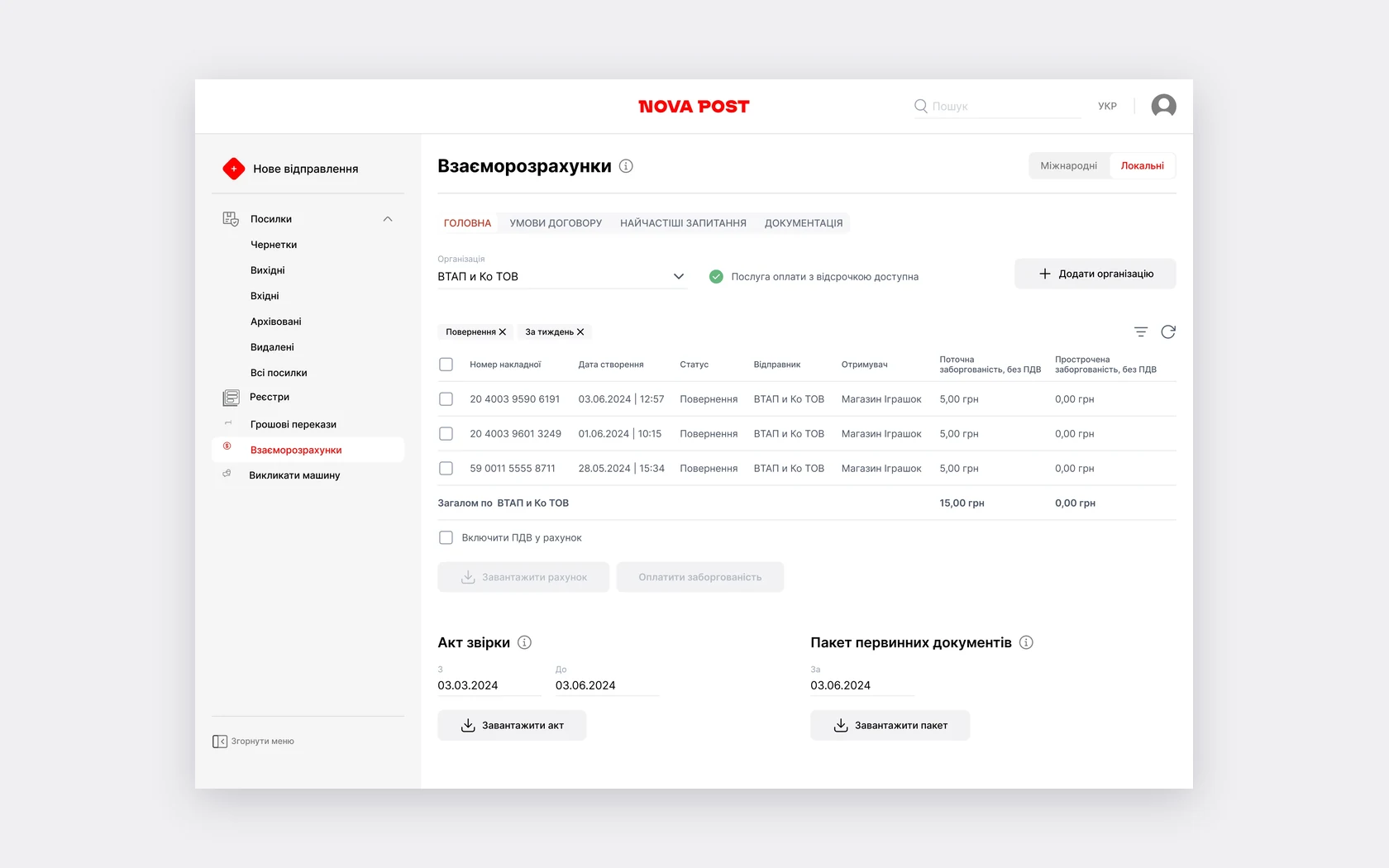
- In “Settlements”, current and overdue debt is shown per waybill, the total is paid with one button, and VAT can be included in the invoice.
- Result
- Debt is visible at any time, not once a month.
How we testedThe debt payment scenario was checked in user testing.
Hi-fi prototype
From the old cabinet to paying for a shipment
The new business cabinet prototype from Figma: switching from the old version, creating a shipment with branches in Kyiv and Lviv, payment and drafts. It plays on its own; switch to «Try it yourself» to click through it.
- Switching to the new cabinet
- Main page
- Shipment details
- Additional services
- Sender
- Recipient
- Payment details
- Data verification
- Shipment created
- Payment
- Drafts
What we recommended next
The survey confirmed some hypotheses that didn't make it into the prototype – we presented them separately, along with a list of old-version features worth moving first.